News

ALLIANCE Project, Annual Meeting (First birthday)

30 September–2 October 2026, Faro, Portugal

From 29 September to 2 October 2026, partners of the ALLIANCE project (European Microalgae Alliance) gathered in Faro, Portugal, for the project’s first Annual Meeting, kindly hosted by GreenCoLab. The meeting marked the completion of the project’s first year and provided an important opportunity to review progress, strengthen collaboration, and align activities for the next phase of the project.

The University of Southern Denmark (SDU) plays a leading role in Work Package 1 (WP1): Safety, Sustainability and Assessment, which focuses on implementing the Safe and Sustainable by Design (SSbD) framework throughout the development of innovative microalgae-based multiproduct biorefineries.

During the meeting, Mahsa Mobasheri presented the progress achieved by SDU within WP1. The presentation highlighted the completion of the SSbD scoping phase, including the development of the system model definition, intended innovation, system boundaries, stakeholder engagement, and preliminary hotspot identification. These activities establish the foundation for the next stages of safety, environmental, economic, and social sustainability assessments across the ALLIANCE value chains.

The meeting also facilitated discussions on the interdependencies between work packages, project progress, and upcoming technical activities. Close collaboration between WP1 and the technology work packages will continue to ensure that safety and sustainability considerations remain integrated throughout the development of the ALLIANCE biorefinery processes.

The annual meeting demonstrated the strong commitment of the consortium to advancing safe, innovative, circular, and sustainable microalgae-based biorefineries. SDU looks forward to continuing its contribution to the implementation and advancement of the SSbD framework throughout the project.
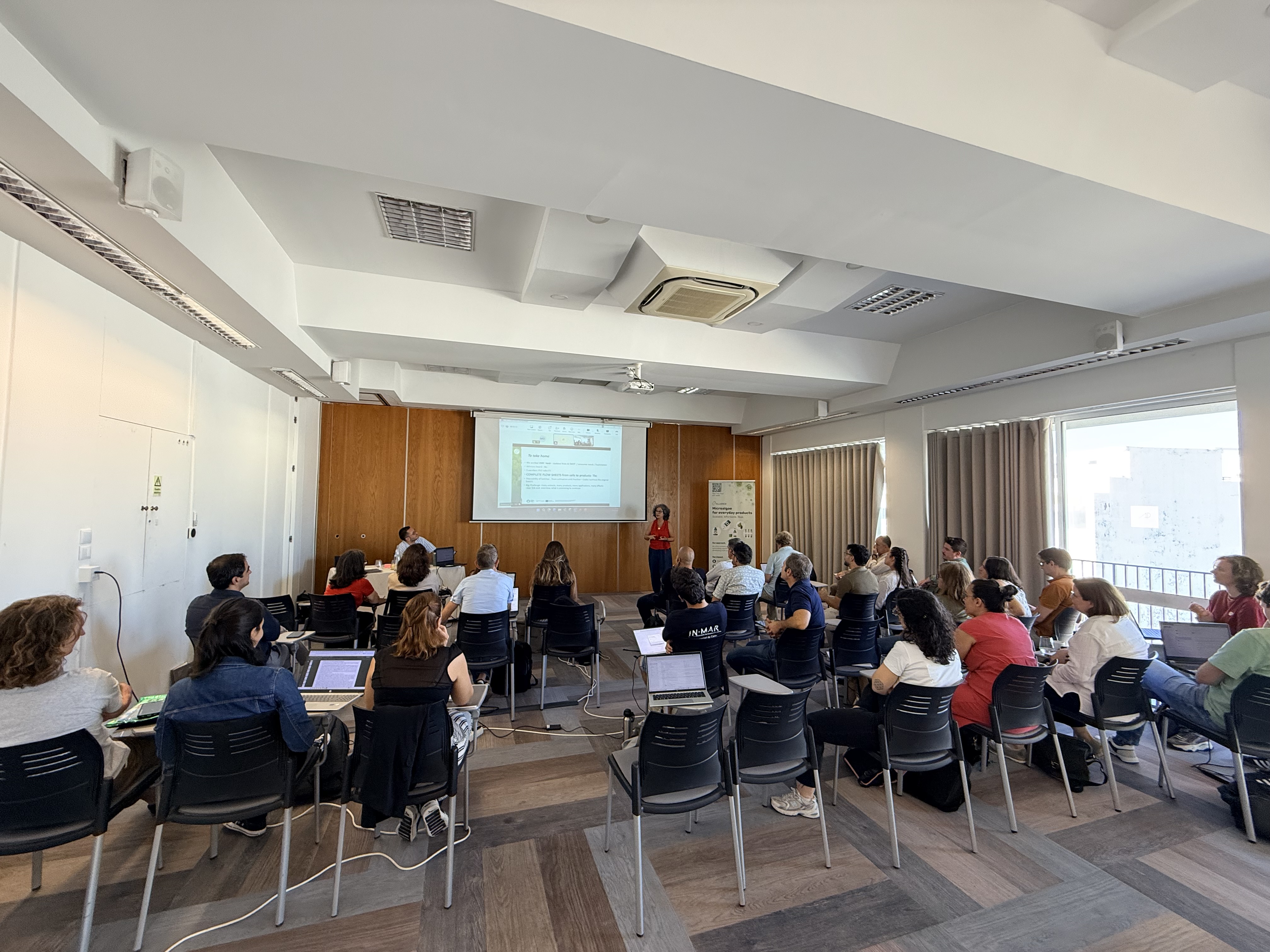
ALLIANCE Project Annual Meeting 2026

PHACTUS Project, Kick-off Meeting (KOM)

3–4 September 2026, Rome, Italy

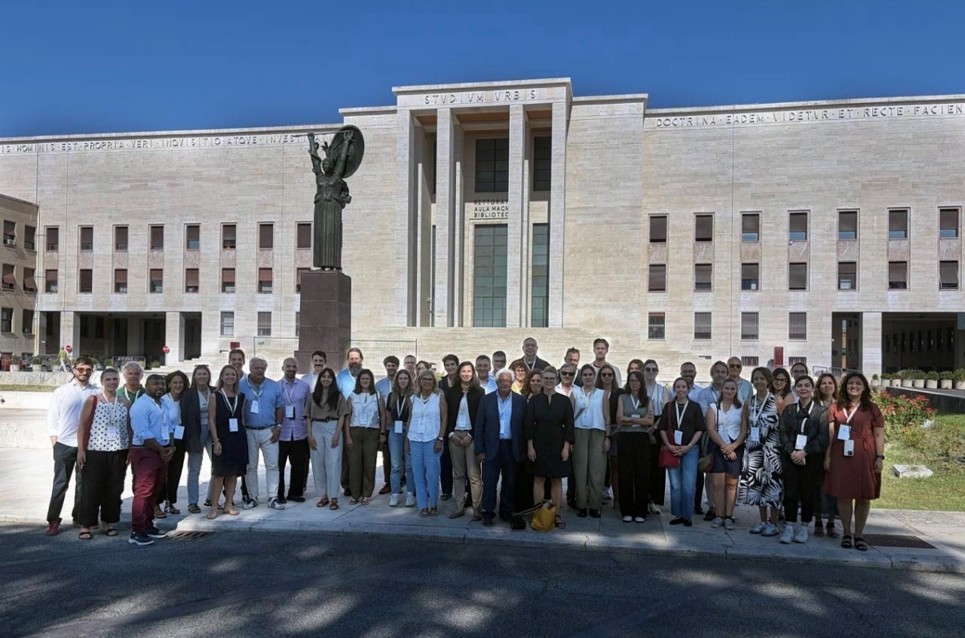
The PHACTUS project officially kicked off on 3–4 September 2026 at Sapienza University of Rome, bringing together partners from across Europe to launch this new Circular Bio-based Europe Joint Undertaking (CBE JU) initiative. PHACTUS aims to scale up a first-of-its-kind continuous process for producing biodegradable polyhydroxyalkanoates (PHAs), specifically PHBV, from urban organic waste and wastewater sludge using mixed microbial cultures.

The project combines continuous upstream and downstream bioprocessing with advanced online monitoring, digital process control, and modelling to improve process robustness and efficiency. In addition to technological innovation, PHACTUS will address safety, sustainability, circularity, market uptake, regulatory aspects, and regional replicability following the principles of the Safe and Sustainable by Design (SSbD) framework.

The University of Southern Denmark (SDU) leads Work Package 1: “Implementing and Advancing the Safe and Sustainable by Design (SSbD) Framework”. During the kick-off meeting, SDU, together with a partner from INRAE (National Research Institute for Agriculture, Food and Environment), presented the WP1 context.

Moreover, Prof. Morten Birkved and Dr Mahsa Mobasheri introduced the objectives, structure, and work plan activities of WP1, highlighting SDU’s role in integrating safety and sustainability considerations from the earliest stages of process and product development. The presentation outlined how the revised European Commission SSbD framework will be implemented throughout the project to support the development of safe, sustainable, and circular PHA production systems.

The kick-off meeting provided an excellent opportunity for partners to align technical activities, strengthen collaboration, and establish a shared roadmap for the project. Over the coming three years, SDU will work closely with the consortium to advance SSbD implementation and contribute to the environmental, economic, and social sustainability assessment of the PHACTUS value chain.

PHACTUS Project Kick-off Meeting 2026

IGT Seminar 2026

28 May 2026, Nyborg, Denmark

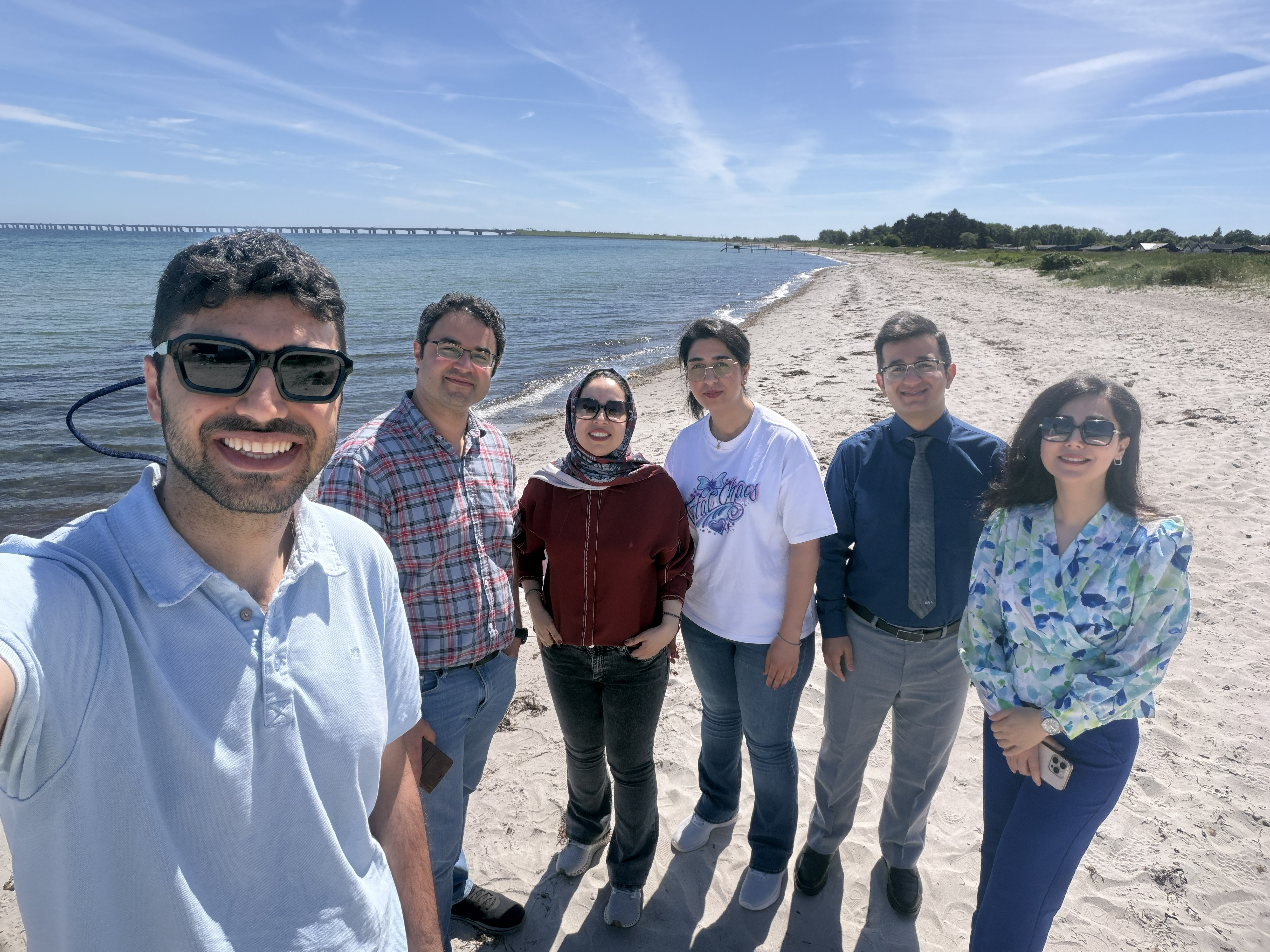
The Department of Green Technology held the IGT Seminar on 28 May 2026, bringing together PhD students, postdocs, and colleagues for a full day of academic exchange, strategic discussion, and team building.

The seminar included ten presentations from PhD students and postdocs, highlighting ongoing research activities across the department. Amin Sadeghi Sheshdeh and Hadis Marami presented their recent work within the AgriLoop project and AGRO4AGRI project , contributing to the discussion on sustainability assessment and resource management in bio based systems.

The programme also included a session on generative AI in academia, followed by a departmental strategy discussion led by the Head of Department. The day concluded with outdoor team building activities, including a small Olympics, which provided an informal and enjoyable setting for strengthening collaboration across the department.

IGT Seminar 2026

EUBCE - European Biomass Conference & Exhibition

19–22 May 2026, The Hague, The Netherlands

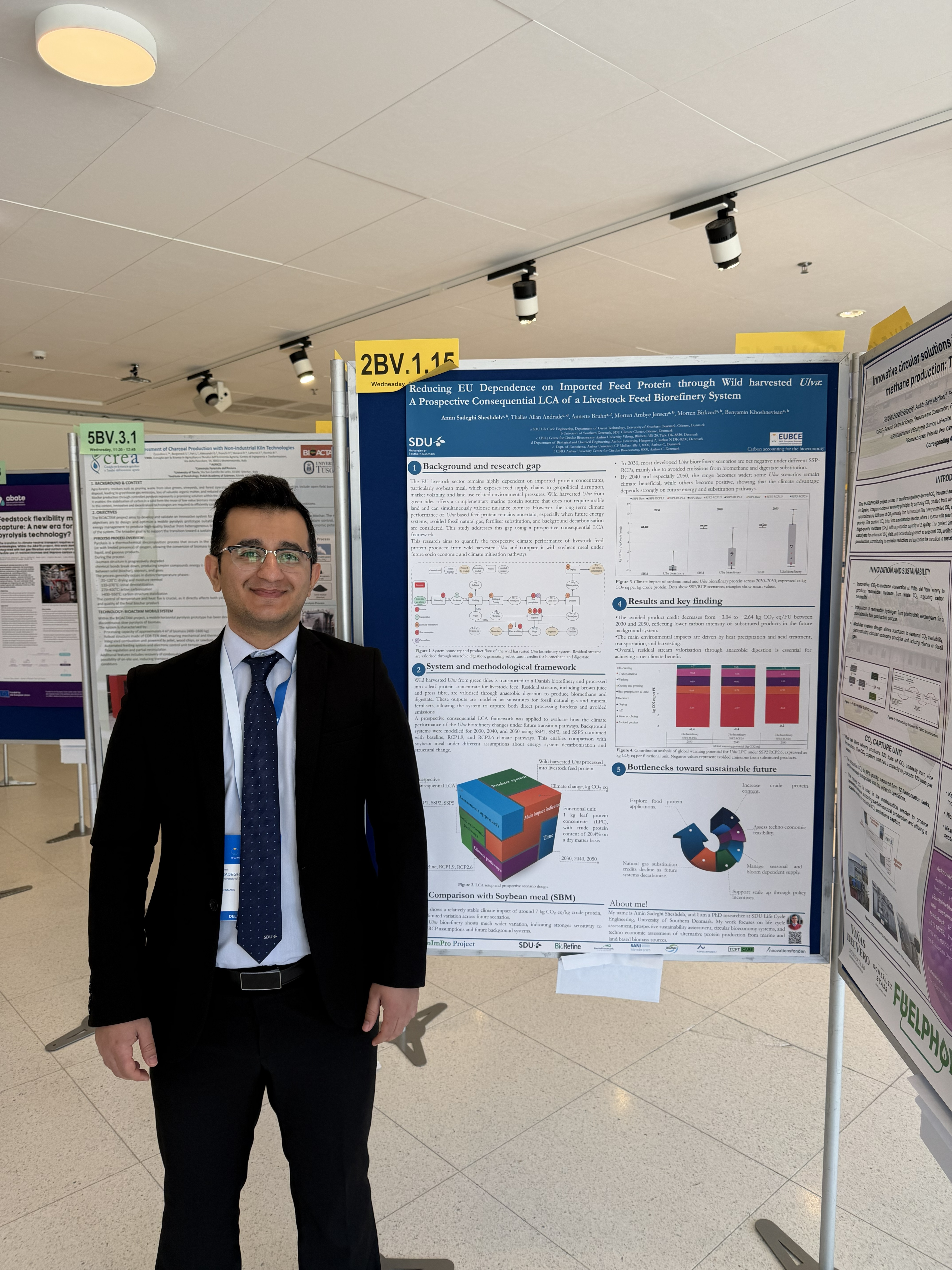
From Tuesday 19 to Friday 22 May 2026, Amin Sadeghi Sheshdeh participated in the EUBCE – European Biomass Conference & Exhibition 2026 in The Hague, The Netherlands, where he presented the poster “Reducing EU Dependence on Imported Feed Protein through Wild harvested Ulva: A Prospective Consequential LCA of a Livestock Feed Biorefinery System.”

The presented work was carried out within the GreenImPro project and focused on the sustainable management and valorisation of green tide Ulva biomass through a biorefinery system.

The study investigated how wild harvested Ulva can be converted into leaf protein concentrate for livestock feed, while residual streams are further utilised for biomethane and digestate production through anaerobic digestion.

Using a prospective consequential life cycle assessment framework, the research evaluated how the climate performance of the system may change under future energy transition and climate mitigation pathways toward 2030, 2040, and 2050.

The conference provided a valuable opportunity to exchange ideas with researchers and practitioners working on biomass valorisation, marine biorefinery systems, circular bioeconomy, and sustainability assessment.

EUBCE 2026

More pictures provided in the photo file

AGRO4AGRI Project, Consortium Meeting M24

28–29 April 2026, Milan, Italy

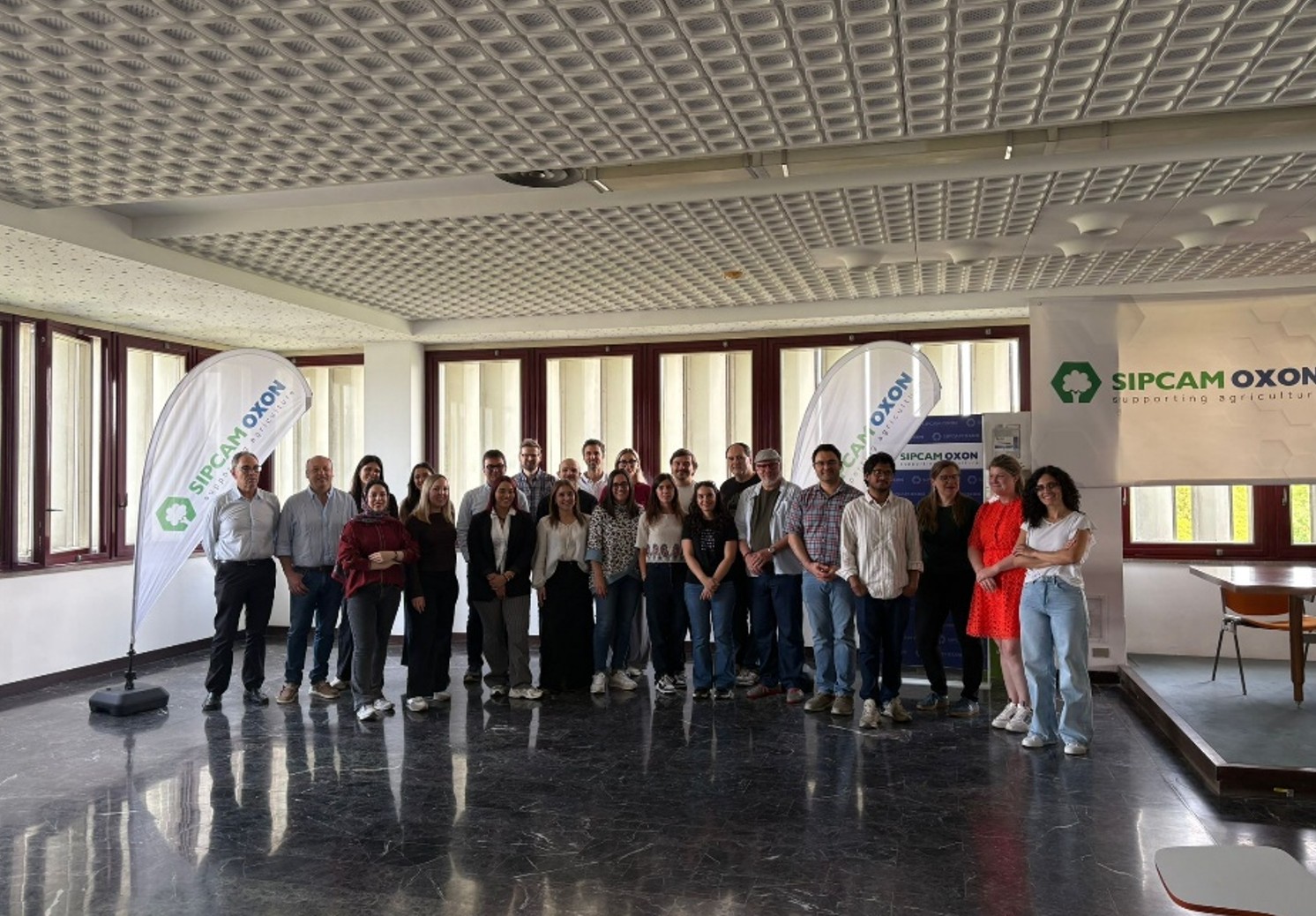
On 28–29 April 2026, the AGRO4AGRI consortium held its M24 meeting in Milan, Italy. The event was kindly hosted by Sipcam Oxon at their formulation site, providing an excellent setting for collaboration, technical discussions, and knowledge exchange among project partners.

During the meeting, SDU, together with colleagues from the Technical University of Denmark (DTU) and the Institute of Advanced Studies (IHS), presented recent progress within Work Package 7: Environmental Safety and Socioeconomic Assessment. Updates were delivered across the main tasks, including safety and toxicity assessment, with a focus on Safe and Sustainable by Design (SSbD), early environmental sustainability assessment, and social and economic impact analysis.

SDU presented preliminary Life Cycle Assessment (LCA) results for various slow-release fertilizer systems based on both organic and inorganic carriers. These results were evaluated within the SSbD performance scoring framework, allowing the identification of key environmental hotspots and areas for potential improvement.

As next steps, SDU will update the LCA models based on newly available laboratory data and continue collecting data related to dsRNA production and encapsulation processes.

Overall, the meeting highlighted the steady progress of the project and the increasing maturity of the developed technologies. AGRO4AGRI continues to advance within a dynamic context shaped by scientific innovation as well as evolving market and policy conditions.

AGRO4AGRI Consortium Meeting M24

ALLIANCE First General Assembly Meeting

9 April 2026

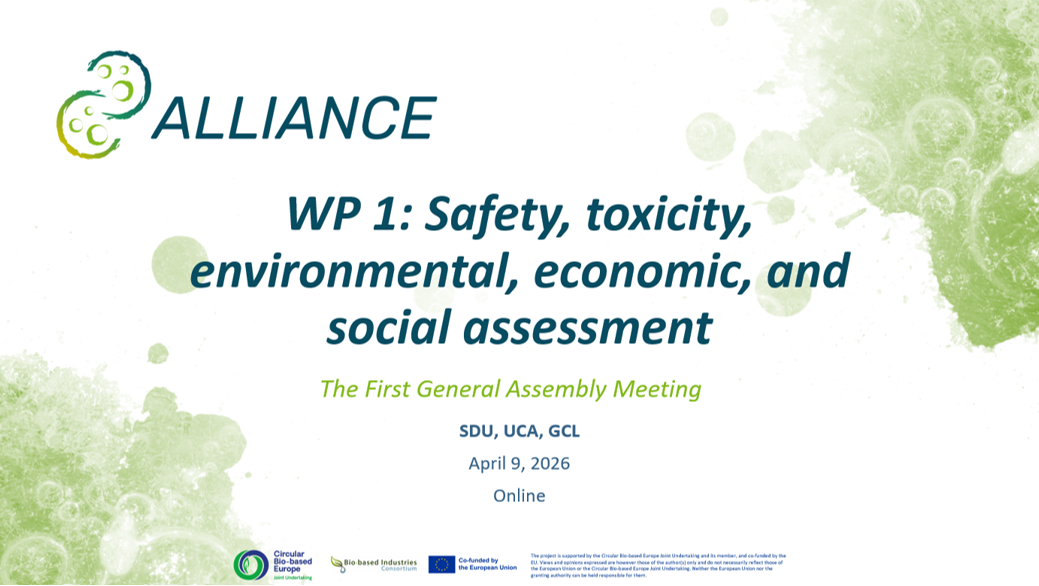
The first General Assembly Meeting of the ALLIANCE project was successfully held online on 9 April 2026, bringing together project partners to align on objectives, share progress, and plan upcoming activities.

During the meeting, each work package presented its ongoing activities. SDU, as WP1 leader for safety, toxicity, environmental, economic, and social assessment, highlighted key advancements achieved during the first eight months of the project. These activities were primarily driven by SDU-led tasks at this stage of the project timeline, including:

  • A Data Compilation Strategy (DCS), aligned with FAIR principles, has been developed to ensure consistent data collection and secure exchange across WPs 2–4.
  • Scoping and system model description have been defined to implement the first stage of the Safe and Sustainable by Design (SSbD) framework as a redesign process, ensuring that safety and sustainability evaluations focus on the appropriate parameters from the beginning of the project.

In addition, an interactive advisory board workshop was conducted, where partners collaboratively identified key topics, expertise needs, and questions for future engagement with external experts.

The meeting provided an important platform for strengthening collaboration and ensuring alignment across technical, environmental, and socio-economic aspects of the project. It marked a strong start for ALLIANCE and established a clear direction for the upcoming phases.

ALLIANCE First General Assembly Meeting

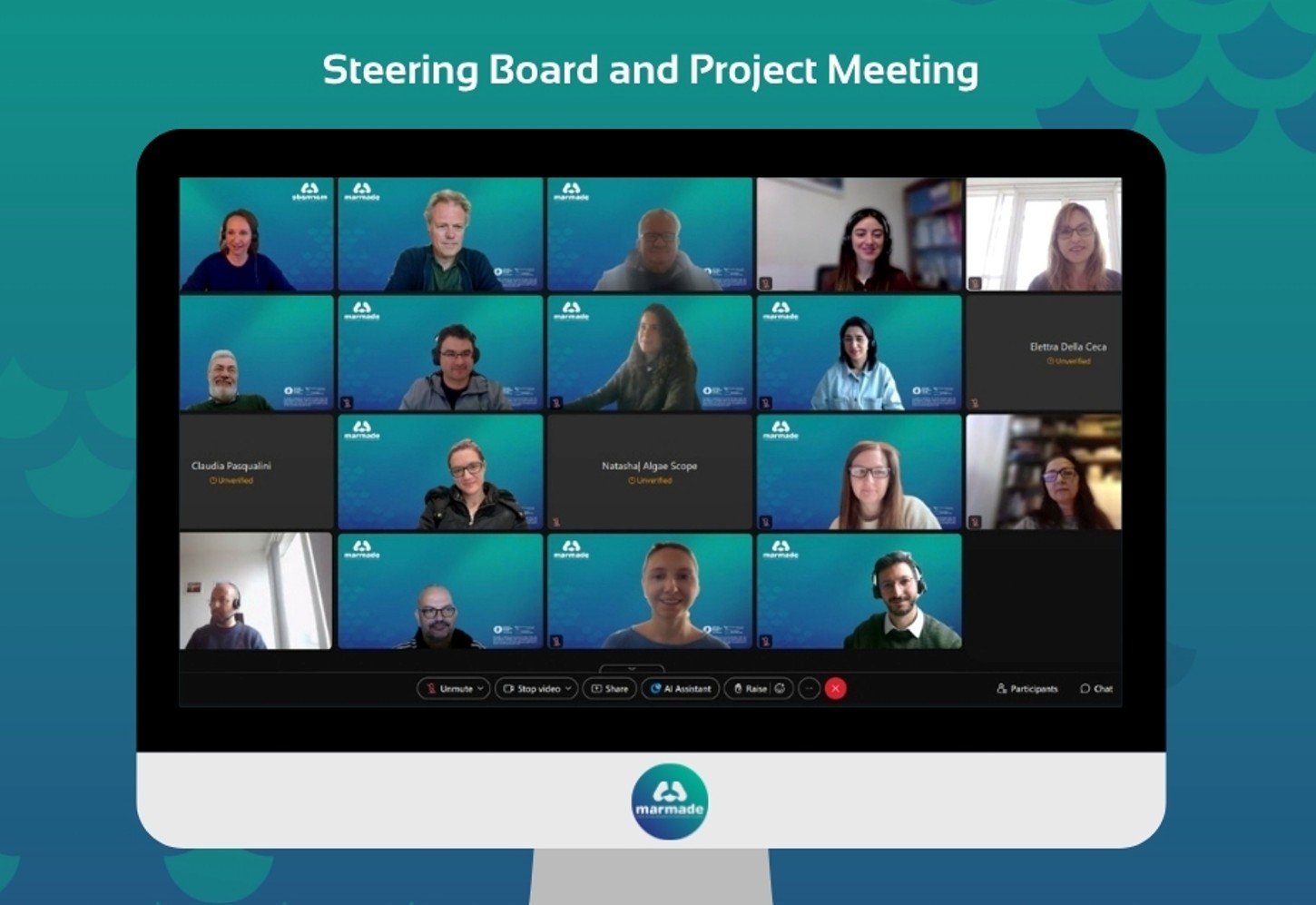
MARMADE Steering Board and Project Meeting

1 April 2026

The MARMADE Steering Board and Project Meeting was successfully held online on 1 April 2026, bringing together project partners to review progress, exchange updates, and coordinate upcoming activities.

During the meeting, each work package presented its ongoing activities and next steps. SDU, as leader of WP5, presented the objectives and status of the sustainability assessment activities, focusing on comprehensive environmental Life Cycle Assessment (LCA), social Life Cycle Assessment (s-LCA), and techno-economic assessment, including TEA and Life Cycle Costing (LCC), within the Safe and Sustainable by Design (SSbD) framework.

SDU also highlighted the main WP5 tasks, and the defined LCA scenarios were presented as an important step towards developing the sustainability assessment framework and aligning it with the technical work packages.

The meeting provided an important platform for strengthening collaboration and ensuring alignment across technical, environmental, social, and economic aspects of the project. It supported clear coordination among partners and helped define the direction for the next phases of MARMADE.

MARMADE Steering Board and Project Meeting

MARMADE 1st General Assembly Meeting

27 November 2025

The 1st General Assembly Meeting of the MARMADE project was successfully held online on 27 November 2025, bringing together all consortium partners to review progress, discuss project governance, and coordinate upcoming activities.

During the meeting, partners presented updates across the work packages and discussed key milestones, responsibilities, and priorities for the next phase of the project. SDU, as leader of WP5, presented activities related to the sustainability assessment, focusing on environmental, social, and economic aspects, as well as the integration of Safe and Sustainable by Design (SSbD) considerations.

The meeting provided an important platform for strengthening collaboration and ensuring alignment across the consortium. It also supported a shared understanding of the project objectives, timeline, and the connections between technical developments and assessment-related activities.

The active participation of partners reflected the strong collaborative spirit of MARMADE and the shared commitment to developing circular and sustainable solutions for the valorization of marine resources.

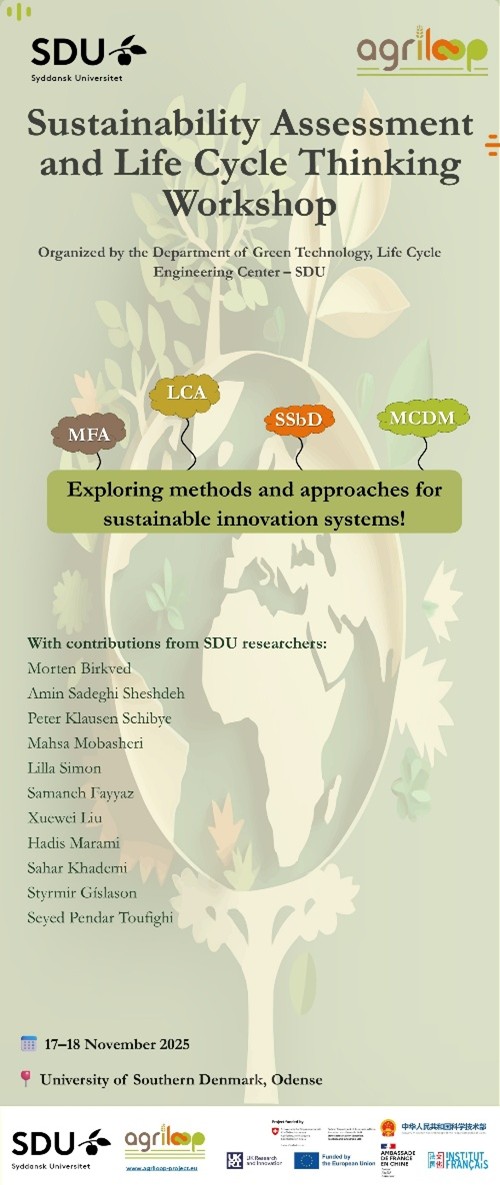
Sustainability Assessment & Life Cycle Thinking Workshop

17–18 November 2025

Our team hosted a two-day Sustainability Assessment & Life Cycle Thinking Workshop at the Department of Green Technology, University of Southern Denmark, organized within the framework of the AgriLoop project. The workshop aimed to strengthen knowledge and practical skills in sustainability assessment methods used to evaluate emerging technologies and bio-based systems.

Day 1 – Lectures and Knowledge Building
The first day focused on key theoretical concepts in sustainability assessment. The lectures covered topics including Systems Thinking, Safe and Sustainable by Design (SSbD), Life Cycle Assessment (LCA), Material Flow Analysis (MFA), agricultural emissions and land-use change, and Multi-Criteria Decision Making (MCDM). The sessions encouraged active discussion and exchange of ideas among participants.

Day 2 – Hands-on Learning
The second day focused on practical training. Participants worked in groups on Life Cycle Assessment case studies, practicing consequential LCA, using the Activity Browser, interpreting results, and presenting their findings at the end of the day.

The workshop provided an interactive platform for learning, collaboration, and strengthening capacity in sustainability assessment and life cycle thinking.

Sustainability Assessment and Life Cycle Thinking Workshop

More pictures provided in the photo file

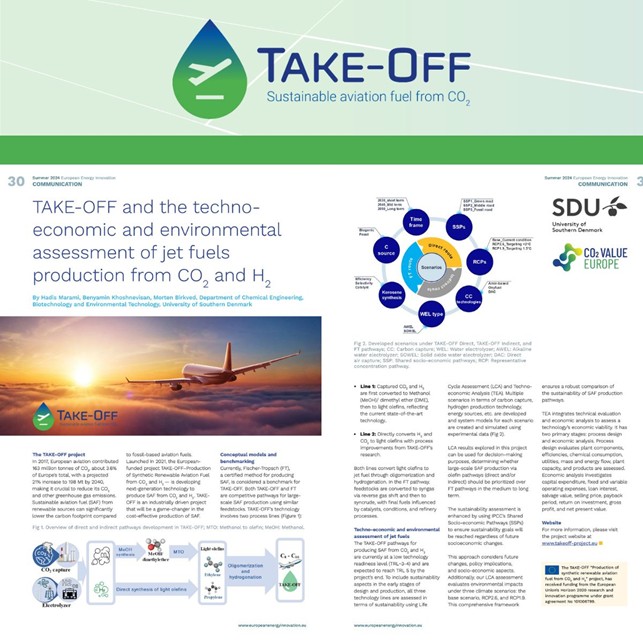
European Energy Innovation Magazine

The TAKE-OFF project was featured in the last edition of the European Energy Innovation magazine in an article titled: TAKE-OFF and the techno-economic and environmental assessment of jet fuel production from CO₂ and H₂.

Our project’s pathways for producing sustainable aviation fuel (#SAF) from CO₂ and H₂ are currently at a low technology readiness level (TRL 3-4) and are expected to reach TRL 5 by the end of the project. To include sustainability aspects in the early stages of design and production, all technology lines are assessed in terms of sustainability using Life Cycle Assessment (LCA) and Techno-economic Analysis (TEA).

Multiple scenarios regarding carbon capture, hydrogen production technology, energy sources, etc. are developed and system models for each scenario are created and simulated using experimental data.

The article was drafted by Benyamin Khoshnevisan and Hadis Marami from our project partner Syddansk Universitet - University of Southern Denmark.

European Energy Innovation Magazine article